


Electric scooters are transforming how we commute in India, offering an eco-friendly, cost-effective alternative to petrol-powered vehicles. At the heart of every electric scooter lies its battery, typically a lithium-ion pack that powers your ride. However, battery health directly impacts range, performance, and longevity. A well-maintained battery can last 3–5 years or more, while neglect can cut its life short. In this guide, we’ll walk you through expert tips on how to maintain your electric scooter battery for a longer life, saving you money and keeping your scooter running smoothly in 2025 and beyond.
The battery is the most expensive component of an electric scooter, often costing 30–40% of the vehicle’s price (e.g., ₹40,000–₹60,000 for models like the Ola S1 Pro or Ather 450X). Poor maintenance leads to reduced range, slower charging, and premature replacement. With proper care, you can extend its lifespan to 1,000+ charge cycles, ensuring your scooter remains reliable for daily commutes or weekend rides. Keywords like "electric scooter battery maintenance" and "how to extend scooter battery life" are trending as EV adoption grows, so let's dive into the actionable steps!
The Golden Rule: Keep It Between 20% and 80%
Lithium-ion batteries thrive when kept within a 20–80% charge range. Fully charging to 100% or letting it drop to 0% stresses the battery cells, reducing their capacity over time.
Tip: Charge your scooter when it hits 20–30% and unplug it at 80% unless you need the full range for a long trip.
For Models with Smart BMS: Scooters like the Bajaj Chetak Premium or Hero Vida V1 Pro have Battery Management Systems (BMS) that prevent overcharging; still, avoid leaving them plugged in overnight unnecessarily.
Real-World Impact: Charging an Ather 450X to 80% daily instead of 100% can add months to its battery life.
Temperature Is Key
Extreme heat or cold can degrade your battery faster. In India, where summer temperatures soar above 40°C and winters dip below 10°C in some regions, storage matters.
Tip: Park your scooter in a shaded, well-ventilated area avoid direct sunlight or damp garages.
Long-Term Storage: If you’re not riding for weeks (e.g., during monsoon downtime), store the battery at 50–60% charge and keep it in a cool, dry place (15–25°C).
Why It Works: High heat accelerates chemical degradation, while freezing cold slows lithium-ion reactions.
Stick to Manufacturer Specs
Using a non-compatible or cheap charger can overheat your battery or deliver inconsistent voltage, causing long-term damage.
Tip: Always use the charger provided by the manufacturer (e.g., Ola’s 750W charger or TVS iQube’s 650W unit). Check for wear on cables and connectors monthly.
Fast Charging Caution: While fast chargers (like Ather Grid stations) are convenient, limit their use to emergencies; frequent fast charging generates heat that shortens battery life.
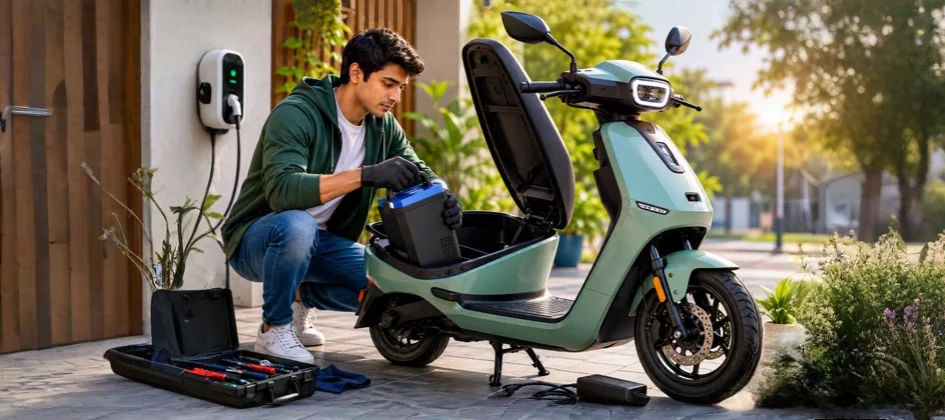
Pro Tip: If your scooter supports removable batteries (e.g., Hero Vida V1 Pro), charge them indoors at room temperature.
Smooth Riding Saves Power
Aggressive acceleration, high speeds, and heavy loads drain your battery faster, putting extra stress on its cells.
Tip: Use Eco or Ride modes (available on scooters like the Ather 450X or TVS iQube ST) for daily commutes instead of Sport mode. Avoid overloading with heavy luggage or multiple riders beyond the recommended limit.
Regenerative Braking: Scooters like the Bajaj Chetak Premium recover energy during braking and use this feature to extend range and ease battery workload.
Impact: Gentle riding can improve efficiency by 10–15%, preserving battery health over time.
Monitor Battery Health
Routine checks catch issues early, preventing costly repairs or replacements.
Tip: Inspect battery terminals for corrosion or loose connections every 3–6 months. Use your scooter’s app (e.g., Ola’s MoveOS or Ather’s dashboard) to monitor charge cycles and health stats.
Service Schedule: Follow the manufacturer’s service intervals. Most brands recommend a checkup every 6 months or 5,000 km.
DIY Caution: Don’t attempt to open the battery pack yourself; rely on authorized service centers.
Protect Against Weather and Terrain
India’s diverse climate and roads can challenge your battery’s durability.
Tip: Limit rides in heavy rain unless your scooter is IP67-rated (like the TVS iQube ST). Avoid steep inclines or rough roads that force the motor to overwork.
Winter Care: In colder regions, let the battery warm up for 5–10 minutes before riding to optimize performance.
Why It Helps: Stable conditions reduce strain, keeping your battery’s chemical balance intact.
Ola S1 Pro Gen 2: Enable “Eco Charge” mode in the app to cap charging at 80%.
Ather 450X Gen 3: Update software regularly for BMS optimizations.
Hero Vida V1 Pro: Store removable batteries separately if not in use for over a month.
With proper care, most lithium-ion batteries in electric scooters (e.g., 3–4 kWh packs) last 3–5 years or 30,000–50,000 km. Brands like Ather and Ola offer warranties of 3–8 years, but real-world lifespan depends on your habits. Follow these tips, and you’ll maximize both range and durability.
Maintaining your electric scooter battery isn’t just about longevity; it’s about performance and savings. A healthy battery means fewer breakdowns, consistent range (e.g., 150+ km on the Hero Vida V1 Pro), and lower electricity costs (10–15 per charge vs. 100+ for petrol). Plus, it’s a win for the planet; fewer battery replacements mean less waste.
Learning how to maintain your electric scooter battery for longer life is simple with the right habits: smart charging, proper storage, efficient riding, and regular checks. Whether you own an Ola S1 Pro, Ather 450X, or any top EV scooter in 2025, these tips will keep your ride powered up and ready to roll. Start today; your wallet and the environment will thank you!
Want more EV advice? Check out our blog on the "Top 5 Electric Scooters in India for 2025," or drop your questions below!



Manage reminders, payment status, and renewal dates from one simple app.


Trusted by policyholders to track every renewal.

