



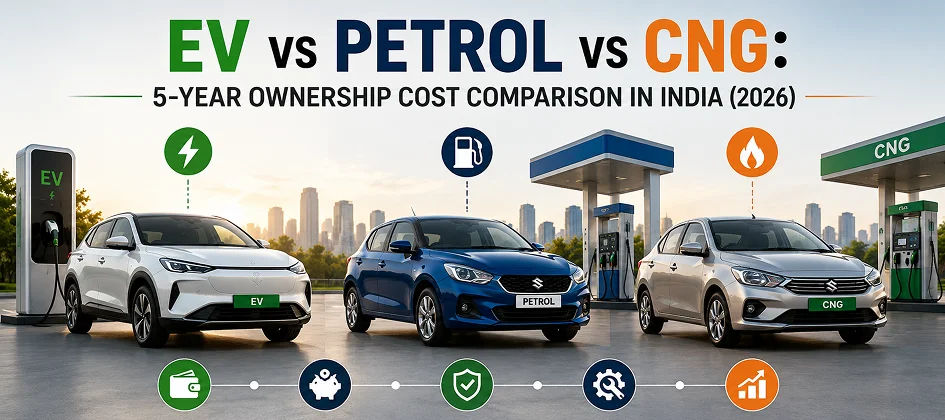
Thinking about buying a new vehicle in 2026? The showroom price tag is only a fraction of what you will spend over five years. With petrol prices staying high, CNG networks expanding rapidly, and Electric Vehicles (EVs) getting faster home-charging setups, choosing the right powertrain requires calculating your Total Cost of Ownership (TCO).
So, over 5 years, which is cheaper to own in India: an EV, petrol, or CNG vehicle?
The short answer: There is no single winner for every buyer.
EVs generally deliver the lowest per-kilometre running costs and minimal routine maintenance, but they come with a higher upfront purchase price.
CNG vehicles strike a strong balance between moderate upfront costs and low running expenses, making them ideal for medium-to-high mileage city drivers.
Petrol vehicles offer the lowest entry price and complete refuelling flexibility, but their high running cost makes them expensive over high distances.
Whether an EV, petrol, or CNG vehicle saves you money depends on key variables like purchase price, annual kilometres, electricity tariffs, local fuel prices, insurance, loan interest, and expected resale value.
Total Cost of Ownership (TCO) measures every rupee spent to buy, run, maintain, and insure a vehicle over a given period minus what you get back when selling it. Looking only at the ex-showroom price is misleading; a cheaper petrol car can cost significantly more overall than an EV if driven heavily over 5 years.
TCO = (Purchase / Financing Cost) + Fuel / Energy Cost + Maintenance + Insurance + Other Expenses - Resale Value
Example: A petrol car costing INR 9 Lakh upfront with INR 5 Lakh in fuel over 5 years costs INR 14 Lakh total (before resale). An EV costing INR 13 lakh upfront with INR 1 lakh in electricity costs INR 14 lakh total over the same period—making them financially equal before factoring in maintenance and depreciation.
| Cost Factor | Electric Vehicle (EV) | Petrol Vehicle | CNG Vehicle |
| Purchase Price | Highest | Lowest | Moderate |
| Energy / Fuel Cost | Very Low (INR 1.00 - INR 1.80/km) | High (INR 6.50 - INR 8.50/km) | Low (INR 3.20 - INR 4.50/km) |
| Cost Per KM | Lowest | Highest | Moderate |
| Maintenance | Low (No oil, fewer moving parts) | High (Engine oil, spark plugs, filters) | Moderate to High (Spark plugs, CNG tuning) |
| Insurance | Slightly higher IDV premium | Standard premium | Standard + CNG kit surcharge |
| Refuelling / Charging | 6-8 hrs home AC / 45 min DC fast | 5 mins at any fuel station | 10-20 mins (Station queues exist) |
| Battery / Engine Life | 8-year / 1.6 Lakh km warranty typical | Long engine life; routine overhauls | Cylinder compliance check every 3 years |
| Resale Value | Evolving / Higher initial depreciation | Stable / High demand | Strong in urban & commercial markets |
| 5-Year TCO Winner | High-mileage users | Low-mileage users | Moderate-to-high mileage users |
Upfront acquisition cost is the largest single expense in your 5-year budget.
EVs: Lithium-ion battery packs keep EV entry prices higher than ICE (internal combustion engine) counterparts. However, low road tax in several Indian states and reduced GST (5% for EVs vs. 28% for petrol/CNG) narrow the gap on on-road pricing.
Petrol: Features the lowest showroom price tag, making it the easiest entry point for buyers paying cash or wanting smaller monthly EMIs.
CNG: Factory-fitted CNG variants generally cost INR 80,000 to INR 100,000 more than their pure petrol counterparts but remain noticeably cheaper than equivalent EVs.
(Note: On-road prices include road tax, registration fees, municipal charges, and mandatory insurance, all of which vary significantly by state).
Running cost is calculated based on energy consumed per kilometre driven.
EV Cost Per KM = (Electricity Used in kWh × Electricity Tariff Rate in INR) ÷ Distance in km
Petrol Cost Per KM = Petrol Price in INR per Litre ÷ Real-World Mileage in km per Litre
CNG Cost Per KM = CNG Price in INR per kg ÷ Real-World Mileage in km per kg
Electricity Tariff: INR 7.50 / kWh (Home Charging domestic slab average)
Petrol Price: INR 102.12 / Litre
CNG Price: INR 83.09 / kg
EV Efficiency (Compact SUV): 7 km / kWh (~14 kWh per 100 km)
Petrol Efficiency (Compact SUV): 14 km / Litre (Real-world city/highway mix)
CNG Efficiency (Compact SUV): 21 km / kg
EV: INR 7.50 ÷ 7 km = INR 1.07 / km
Petrol: INR 102.12 ÷ 14 km = INR 7.29 / km
CNG: INR 83.09 ÷ 21 km = INR 3.95 / km
Below is an illustrative calculation of total energy/fuel expenses across three different annual driving profiles over a 5-year period (60 months), based on the baseline costs established above:
| Annual Distance | Total 5-Yr Distance | EV 5-Year Energy Cost | Petrol 5-Year Fuel Cost | CNG 5-Year Fuel Cost |
| 8,000 km / year | 40,000 km | INR 42,800 | INR 291,600 | INR 158,000 |
| 12,000 km / year | 60,000 km | INR 64,200 | INR 437,400 | INR 237,000 |
| 20,000 km / year | 100,000 km | INR 107,000 | INR 729,000 | INR 395,000 |
Higher annual mileage directly compounds EV energy savings, making high-use drivers recoup their initial investment much faster.
Routine mechanical upkeep varies heavily across powertrain architectures:
EVs have roughly 20 moving parts in their drivetrain compared to over 2,000 in an ICE vehicle.
What you pay for: Cabin air filter replacements, brake fluid, coolant top-ups, tyre rotation/replacement, wiper blades, and annual software diagnostic checks.
Brake wear: Significantly lower due to regenerative braking.
Requires traditional engine maintenance schedules.
What you pay for: engine oil & filter replacement (every 10,000 km), air filters, spark plugs, engine tuning, coolant flushing, transmission oil changes, clutch replacement, and exhaust system upkeep.
Requires dual-system servicing.
What you pay for: All standard petrol engine maintenance items, plus CNG filter replacements, spark plug replacement at shorter intervals, CNG compliance hydro-testing (every 3 years by law), and valve clearance checks.
Insurance: EV insurance premiums are roughly 10-15% higher initially due to higher Insured Declared Value (IDV) and battery replacement costs, though third-party rates carry government discounts for electric cars. CNG vehicles require a small additional premium surcharge for the retrofitted or factory CNG kit.
Financing: If financing a vehicle over 5 years at 9% per annum, an EV’s higher upfront cost results in larger total interest payments compared to petrol or CNG variants.
A common concern among buyers is EV battery degradation.
Most manufacturers in India offer 8-year / 160,000 km battery warranties, guaranteeing at least 70-80% state of health. Battery replacement should not be treated as an automatic 5-year expense. Modern LFP (Lithium Iron Phosphate) batteries commonly used in Indian EVs are rated for 2,000 to 3,000 full charge cycles, easily lasting 150,000+ km under normal operating conditions before capacity drops significantly.
Depreciation is typically the single largest hidden cost in TCO.
Petrol Vehicles: Predictable and stable resale market. High demand in both urban and semi-urban markets ensures strong retention (typically 50-60% of original value retained after 5 years).
CNG Vehicles: Highly sought after in urban hubs and commercial markets, keeping resale values resilient.
EVs: Evolving rapidly. While early-generation EVs saw faster depreciation due to tech jumps, modern long-range models with established battery warranties are stabilising, retaining roughly 45-55% value at the 5-year mark depending on overall battery health checks.
Let’s compare a realistic compact car buyer scenario (e.g., benchmarked around mid-spec sub-4 m SUVs driving 15,000 km/year).
Annual Driving: 15,000 km
EV Purchase: INR 13,50,000 | Petrol Purchase: INR 9,50,000 | CNG: Purchase: INR 1,050,000
Resale Value (Yr 3): EV (65%), Petrol (70%), CNG (68%)
Resale Value (Yr 5): EV (50%), Petrol (55%), CNG (52%)
| Cost Component | EV | Petrol | CNG |
| Purchase Price | INR 13,50,000 | INR 950,000 | INR 1,050,000 |
| Total Fuel / Energy Cost | INR 48,150 | INR 328,050 | INR 177,750 |
| Estimated Maintenance | INR 12,000 | INR 24,000 | INR 28,000 |
| Insurance & Fees | INR 70,000 | INR 55,000 | INR 60,000 |
| Subtotal Spent | INR 1,480,150 | INR 13,57,050 | INR 1,315,750 |
| Less Resale Value (Year 3) | - INR 877,500 | - INR 665,000 | - INR 714,000 |
| NET 3-YEAR TCO | INR 602,650 | INR 692,050 | INR 601,750 |
| Cost Component | EV | Petrol | CNG |
| Purchase Price | INR 13,50,000 | INR 950,000 | INR 1,050,000 |
| Total Fuel / Energy Cost | INR 80,250 | INR 546,750 | INR 296,250 |
| Estimated Maintenance | INR 25,000 | INR 45,000 | INR 52,000 |
| Insurance & Fees | INR 110,000 | INR 88,000 | INR 95,000 |
| Subtotal Spent | INR 1,565,250 | INR 1,629,750 | INR 1,493,250 |
| Less Resale Value (Year 5) | - INR 675,000 | - INR 522,500 | - INR 546,000 |
| NET 5-YEAR TCO | INR 890,250 | INR 1,107,250 | INR 947,250 |
Key takeaway: By Year 5, the EV's massive fuel savings pull it ahead of petrol by over INR 2.1 lakh, catching up to and beating CNG at higher annual mileages.
The break-even point is the distance or time required for your operational fuel savings to recover the higher upfront purchase cost of an EV.
Break-Even Distance in km = EV Purchase Premium in INR ÷ (Petrol or CNG Cost per km - EV Cost per km)
Vs Petrol (INR 4.00 lakh price premium, saving ~INR 6.22/km): Break-even occurs at around 64,300 km (approx. 4.2 years at 15,000 km/yr).
Vs CNG (INR 3.00 lakh price premium, saving ~INR 2.88/km): Break-even occurs at around 104,000 km (approx. 6.9 years at 15,000 km/yr).
Best for Low-Mileage Drivers (< 8,000 km/year): Petrol. You won't drive enough to recover an EV or CNG's upfront purchase premium through fuel savings.
Best for High-Mileage Drivers (> 18,000 km/year): EV. The low cost per km yields massive compound savings over 5 years.
Best for City Commuters: EV or CNG. Quiet driving, automatic transmission options in EVs, and low stop-and-go running costs suit metro traffic.
Best for Long-Distance / Highway Drivers: Petrol or CNG. Instant refuelling without planning around DC fast-charging infrastructure.
Best for Budget Buyers: Petrol. Lowest initial down payment and lowest monthly loan EMI requirement.
Best for Commercial / Fleet Users: EV or CNG. High daily utilisation maximises return on investment rapidly.
The financial outcome shifts depending on the vehicle segment:
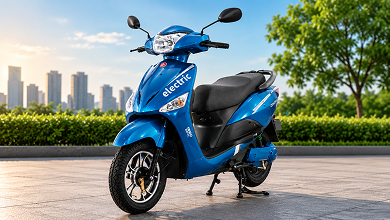
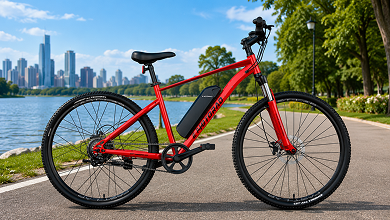
Electric 2-wheelers hit their break-even point much faster (often within 1.5 to 2 years / 18,000 km) due to small price gaps after state subsidies and very high petrol costs for short commuting journeys.
Subcompact and compact passenger cars require 3.5 to 5 years to recover upfront premiums depending on whether home charging is available.
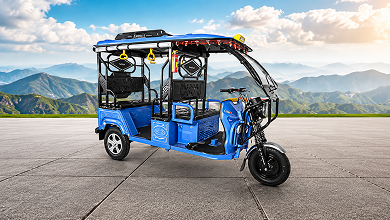
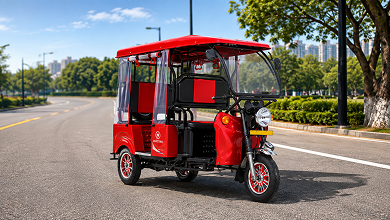
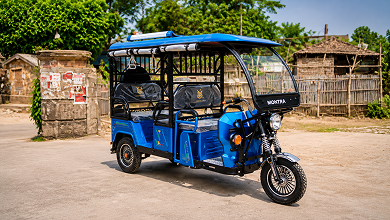
E-rickshaws and electric 3-wheelers beat conventional petrol/diesel alternatives almost immediately due to all-day city running, low maintenance overheads, and high fuel savings.
Home Charger Installation: Setting up a 7.4 kW AC wall box may require electrical load upgrades, earthing work, or cabling extensions.
Public Fast-Charging Premiums: Charging on public DC fast chargers costs INR 18–25/unit, higher than domestic tariffs.
CNG Station Waiting Time: Time lost standing in long CNG refuelling queues during peak city hours carries an opportunity cost.
Boot Space Loss: Factory or aftermarket CNG cylinders take up significant luggage room unless buying dual-cylinder setups.
Tyre Wear in EVs: Heavy instant torque and extra battery weight can cause EV tyres to wear out slightly faster than standard ICE tyres if driven aggressively.
Follow these steps to customise the calculation for your exact needs:
Step 1: Note the exact on-road purchase price for all three option variants.
Step 2: Estimate your expected annual kilometres ($A$).
Step 3: Calculate 5-Year Fuel Cost:
Fuel Cost = (Annual Kilometres × 5) × Cost per KM
Step 4: Estimate 5-Year Maintenance (typically INR 25,000 for EV, INR 45,000 for petrol, and INR 50,000 for CNG).
Step 5: Calculate 5-year insurance total (add ~10% extra for EV IDVs).
Step 6: Add financing interest if taking a vehicle loan.
Step 7: Subtract expected resale value after 5 years.
Step 8: Sum up total expenditures to find your true winner.
Selecting the right vehicle comes down to aligning your daily driving patterns with your long-term budget:
Choose EV when you drive more than 12,000 km per year, have a dedicated home charging spot, desire smooth automatic driving, and want the lowest operational running cost per kilometre.
Choose CNG when you drive 10,000 to 18,000 km per year, want lower running costs than petrol without paying an EV price premium, and have easy access to CNG refuelling stations in your city.
Choose petrol when your annual driving is under 8,000–10,000 km, upfront budget flexibility is paramount, and you frequently take spontaneous long-distance road trips into remote areas with limited charging infrastructure.


Manage reminders, payment status, and renewal dates from one simple app.


Trusted by policyholders to track every renewal.

