Frequently Asked Questions
What is the price of EKA K1.5 Delivery Van in India?
The EKA K1.5 Delivery Van is priced at ₹17,50,000 (ex-showroom). On-road price varies by state — includes RTO charges, road tax, insurance, and FAME II EV subsidies.
What is the driving range of EKA K1.5 Delivery Van on a single charge?
The EKA K1.5 Delivery Van offers a certified range of 180 km km on a full charge. Actual range varies by load, terrain, speed, and temperature.
What is the battery capacity of EKA K1.5 Delivery Van?
The EKA K1.5 Delivery Van has a 32 kwh battery pack (Lithium Ferrous Phosphate (LFP)) — engineered for heavy-duty commercial operations with long cycle life.
How long does it take to charge EKA K1.5 Delivery Van?
Standard charge: approximately 6-8 Hours (AC). Fast charging (AC / DC (Fast Charge)): ~Yes (Fast Charge Capable).
What is the motor power and torque of EKA K1.5 Delivery Van?
The EKA K1.5 Delivery Van features a PMS Motor - Permanent Magnet Synchronous Motor motor producing 60 and 220 torque, delivering strong pulling capability at full load.
What is the payload capacity of EKA K1.5 Delivery Van?
The EKA K1.5 Delivery Van carries up to 1300 kg payload with a GVW of 2510 kg — ideal for heavy cargo, construction, and logistics.
What is the gradeability of EKA K1.5 Delivery Van?
The EKA K1.5 Delivery Van handles a gradeability of 18% — climbs steep inclines at full load, ideal for mining, construction, and hilly terrain.
What is the top speed of EKA K1.5 Delivery Van?
The EKA K1.5 Delivery Van reaches a maximum speed of 70 kwh km/h — optimised for commercial safety on intra-city, industrial, and highway routes.
What type of transmission does EKA K1.5 Delivery Van use?
The EKA K1.5 Delivery Van uses a Automatic with FWD drive — reduces driver fatigue and enables smooth shifts under heavy load.
What braking system does EKA K1.5 Delivery Van have?
Brakes: Disc (front) and Drum (rear).
What suspension system does EKA K1.5 Delivery Van use?
The EKA K1.5 Delivery Van uses MacPherson Independent Suspension (front) and Longitudinal Leaf Spring (rear) suspension — absorbs shocks and maintains stability at full payload.
What cabin and comfort features does EKA K1.5 Delivery Van offer?
The EKA K1.5 Delivery Van has a Day Cabin cabin for long-hour commercial operations.
Does EKA K1.5 Delivery Van support telematics and fleet tracking?
Yes, the EKA K1.5 Delivery Van includes: vehicle tracking, geo-fencing, GPS navigation — enabling real-time fleet monitoring of location, performance, and efficiency.
What is the running cost of EKA K1.5 Delivery Van vs diesel trucks?
Electric trucks like EKA K1.5 Delivery Van cost ~Rs.1-2 per km vs Rs.5-8 per km for diesel. With lower maintenance costs, the total cost of ownership is significantly lower over the vehicle's lifetime.
What are the best use cases for EKA K1.5 Delivery Van?
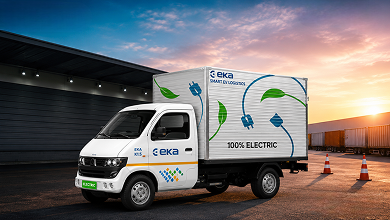
Designed as a Mini Truck. Suited for Delivery Van operations. Body option: Delivery Van (Enclosed Body) / Box Body.
Is EKA K1.5 Delivery Van environment-friendly?
Yes, EKA K1.5 Delivery Van produces zero tailpipe emissions. Complies with Zero Emission norms. Switching to EKA K1.5 Delivery Van reduces fleet carbon footprint and supports India's green mobility goals.
Is EKA K1.5 Delivery Van eligible for government EV subsidies in India?
EKA K1.5 Delivery Van may qualify under FAME II and state-level EV policies. Incentives vary by state and GVW. Check with your dealer or the official government EV portal for applicable subsidies.
Is EKA K1.5 Delivery Van low maintenance?
Yes — no engine oil, gearbox oil, clutch, or exhaust system means fewer service intervals, lower costs, and better fleet uptime and profitability.
What driving licence is required to operate EKA K1.5 Delivery Van in India?
A valid Heavy Motor Vehicle (HMV) driving licence is required, along with the necessary commercial vehicle permits per RTO norms.
Is EKA K1.5 Delivery Van worth buying for your fleet in India?
EKA K1.5 Delivery Van offers range of 180 km km, 1300 kg payload, 60 motor — a future-ready commercial vehicle that lowers fuel and maintenance costs while meeting sustainability targets.